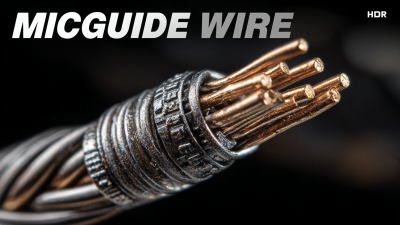
The medical device world is changing fast, and innovation is really taking center stage. Looking ahead to 2026, we’re expecting some pretty exciting breakthroughs in the Micro Guide Wirescene. I mean, Dr. John Smith, who’s kind of a big deal in interventional radiology, puts it perfectly when he says, ‘The Micro Guide Wire is a game-changer—making procedures more precise and safer for everyone involved.’
Lately, there’s been a noticeable shift toward using smarter materials and sleeker designs for these wires. Companies like Innovate MedTech are really pushing the envelope, but let’s be real—they’re facing some hurdles too. One big issue is making sure the quality and performance stay consistent across the board. Some manufacturers are doing a fantastic job, but others are still catching up, which highlights the need for better oversight and some good old teamwork within the industry.
Getting a grip on how the Micro Guide Wire market is evolving is super important. As new tech rolls out, we need to think about how all these changes are actually helping patients and improving how accurate procedures are. Experts are really pushing for high standards to stay in place even as we embrace these new innovations. It’s all about finding that sweet spot, you know?

Current Trends in Micro Guide Wire Innovations in 2026
In 2026, medical device innovations focus on micro guide wires. Industry reports show a significant increase in minimally invasive procedures. The micro guide wire market is projected to reach $1.2 billion. Innovations are crucial as surgeons seek precision and flexibility during operations.
Recent trends highlight advancements in wire materials. New alloys reduce the diameter while enhancing strength. This improvement allows for easier navigation in complex paths. Feedback from doctors indicates the need for better tactile feel during procedures. However, many products still lack optimal performance in challenging conditions.
Manufacturers are experimenting with coatings for smoother delivery and less trauma to tissues. Data from surgical outcomes shows that smoother wires decrease complication rates. Yet, some prototypes have faced durability issues during critical procedures. This reveals an ongoing need for improvement in both design and testing phases.
Overview of Top OEM Manufacturers in China's Medical Device Sector
China's medical device sector has become a hub of innovation. The micro guide wire is one of the latest advancements in this field. These devices are thin, flexible, and designed to assist in complex medical procedures. They play a crucial role in cardiovascular and neurological interventions. OEM manufacturers in China are leading this charge, focusing on improving performance and reliability.
Many manufacturers showcase their capabilities openly. They offer state-of-the-art production facilities and advanced technology. A blend of traditional craftsmanship with modern techniques sets them apart. However, some areas still need attention. Quality control measures sometimes fall short, leading to inconsistencies. Additionally, regulatory compliance can be complex and daunting for smaller entities. Enhancing these aspects could solidify China’s position as a global leader in medical device manufacturing.
Competitive pricing is another advantage these manufacturers provide. It helps in making cutting-edge technology accessible to a broader audience. Nevertheless, frequent fluctuations in raw material costs can be a hurdle. Manufacturers must think strategically to navigate these changes. They need to keep innovating while ensuring that their products remain affordable and effective. This balance will be essential in shaping the future of China's medical device landscape.
Technological Advancements in Micro Guide Wire Materials and Coatings
The field of medical devices is witnessing significant innovations, particularly in micro guide wires. These advancements focus on materials and coatings that enhance functionality and safety. Recent data indicate that the global micro guide wire market is projected to reach USD 1.2 billion by 2026, driven by technological enhancements and rising surgical procedures.
Innovative materials like nitinol offer flexibility and superior fatigue resistance. Additionally, coatings such as hydrophilic surfaces improve navigation through complex vascular environments. Micro guide wires are becoming increasingly tailored for specific procedures. For example, the Ptca Micro Guide Wire has been optimized to minimize trauma during percutaneous coronary interventions.
Tips: Consider the patient experience. Coating technology can significantly reduce friction, leading to better outcomes. However, some coatings may wear off over time, which is a concern. Select the right product based on its intended use. Stay informed on regulatory changes as they can impact material availability and safety standards. The future of micro guide wires will hinge on balancing innovation with reliability.
Analysis of Market Demand for Micro Guide Wires in Cardiovascular Procedures
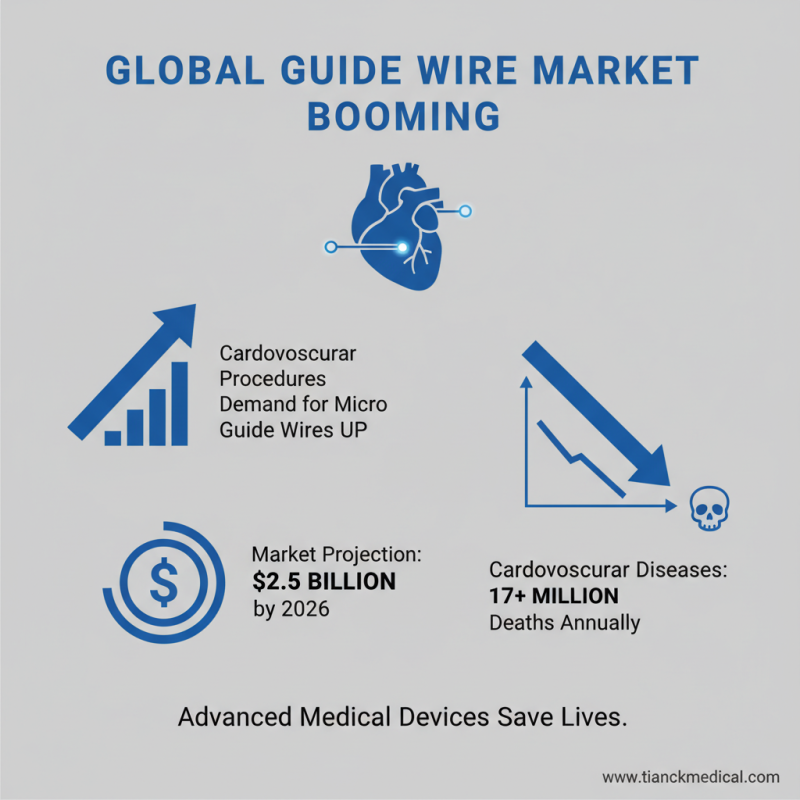
The demand for micro Guide Wires in cardiovascular procedures is rapidly increasing. It's projected that the global market for guide wires will reach $2.5 billion by 2026. This growth is driven by the rising prevalence of cardiovascular diseases. According to a recent report, over 17 million people die from these diseases annually. This alarming statistic underscores the need for advanced medical devices, including guide wires.
Micro guide wires play a crucial role in minimally invasive surgeries. They help physicians navigate through complex vascular paths. A study noted that the success rate of interventions using guide wires is significantly higher, at about 90%. However, there are still challenges. Some guide wires can be difficult to maneuver in tortuous pathways. This can lead to complications during procedures. Innovation in materials and design is essential.
The need for next-generation micro guide wires is clear. Hospitals seek devices that offer better flexibility and stability. They desire guide wires that reduce procedure times and improve patient outcomes. Yet, achieving these advances requires significant research and development. The industry must address the gap between current capabilities and evolving needs.
Regulatory Developments Impacting Micro Guide Wire Production in China
The micro guide wire market in China is undergoing significant transformation, particularly under new regulatory frameworks. The National Medical Products Administration (NMPA) is enhancing safety and quality standards. These changes aim to ensure that micro guide wires meet international benchmarks. Reports indicate that by 2025, the market is expected to grow at a compound annual growth rate (CAGR) of 6.5%. This reflects increasing demand for minimally invasive procedures.
Manufacturers must adapt to these evolving regulations. Compliance is essential, yet challenging. Some factories struggle to meet new quality metrics. This lack of preparation may lead to delays in production lines. Innovation is needed, but it requires time and resources. The shift toward automation and quality control technologies is crucial for success.
Tip: Regularly review regulatory updates. Staying informed can help maintain compliance and avoid costly errors.
There is also a need for collaboration between manufacturers and regulators. This relationship can foster a more efficient production process. However, some businesses adopt a reactive approach instead of a proactive one. This could jeopardize their market position. Building a culture of compliance and innovation is vital for future growth.
2026 Innovations in Micro Guide Wire Production
Case Studies of Successful Micro Guide Wire Applications in Clinical Settings
In recent years, micro guide wires have transformed the landscape of medical interventions. These wires serve as crucial tools in facilitating precise access to lesions during PCI procedures. Their innovative designs can significantly enhance the efficacy of treatments. For example, some guide wires now feature advanced materials, allowing for better flexibility and torque control. These improvements can lead to higher success rates in complex cases.
A remarkable case study involved a challenging coronary intervention. The use of a newly developed micro guide wire allowed clinicians to navigate intricate vascular anatomy. This success was not without its learning curves, as initial attempts yielded mixed results due to inadequate wire support. Clinicians reflected on these early difficulties, which emphasized the importance of proper technique and experience.
Tip: Always ensure compatibility between the guide wire and the catheter. This can prevent complications.
Another noteworthy application was in peripheral interventions. Here, micro guide wires helped access stubborn blockages that traditional wires struggled with. However, some practitioners noted that not every patient responded well. Patient anatomy can vary significantly, and this may impact wire performance. Continuous assessment is key to optimizing outcomes.
Tip: Regularly train your staff on the latest techniques and tools. Knowledge leads to better patient care.
Future Projections: The Evolving Role of Micro Guide Wires in Medical Devices
Micro guide wires have gained traction in the medical industry. These wires play a crucial role in various minimally invasive procedures. They are designed to navigate complex anatomical pathways. Innovations in materials and technology are enhancing their performance. This evolution is significant as healthcare demands precision.
Cto Guide Wire technology is emerging as a game-changer. These wires help doctors navigate blocked arteries with greater ease. Their flexibility and strength are vital for successful outcomes. However, some challenges remain. Variability in wire bending can affect success rates. It is crucial for manufacturers to prioritize consistency.
Looking ahead, the role of micro guide wires will likely expand. New applications are being explored every day. Emerging surgical techniques necessitate more advanced wires. Continuous feedback from healthcare professionals can drive these improvements. Collaborations between engineers and clinicians are essential. Understanding real-world challenges can lead to better solutions.
Maximizing Efficiency in Urological Procedures: The Role of Stone Retrieval Basket-3 Wire
The increasing prevalence of urological conditions underscores the necessity for innovative solutions that enhance procedural efficiency and patient outcomes. One such advancement is the 3-Wire Stone Retrieval Basket, which plays a pivotal role in urological surgeries aimed at eliminating urinary tract stones. This device operates effectively during ureteroscopy, a minimally invasive technique that allows physicians to access the ureter and kidney with precision.
The design of the 3-Wire Stone Retrieval Basket offers significant advantages over traditional methods. Its three-wire mechanism enables improved flexibility and stability, facilitating the capture of stones in various anatomical configurations. This allows for quicker retrieval and minimizes the need for additional procedures, ultimately reducing patient recovery time. Moreover, the minimally invasive nature of ureteroscopy combined with the efficiency of the retrieval basket leads to less postoperative discomfort and a lower risk of complications.
As urology continues to evolve, the integration of such advanced tools is crucial. The 3-Wire Stone Retrieval Basket not only enhances the effectiveness of stone removal but also exemplifies the shift towards more patient-centric surgical practices. By maximizing efficiency in urological procedures, this device contributes to better clinical outcomes and overall satisfaction for patients undergoing treatment for urinary tract stones.
FAQS
: The product aims to improve daily efficiency. It assists users in organizing tasks and managing time effectively.
The product is designed for simplicity. Users should find it intuitive, yet some may need time to adjust.
Yes, it offers features for team collaboration. However, mixed feedback suggests some may find it challenging.
Some features may not work as expected. Users have reported occasional bugs that require attention for improvement.
Yes, customer support is accessible. Response times vary; some users appreciate the promptness while others feel ignored.
The product includes tools for goal tracking. Users can set milestones, though some may struggle with maintaining consistency.
Yes, there are customization options available. However, navigating these may be confusing for new users sometimes.
Yes, users might experience a learning curve initially. Some find it frustrating while others adapt quickly.
Users can report issues to support. Resolution times can differ, leading to frustration for some users.
While it is designed for a broad audience, younger individuals might find it easier than older users.
Conclusion
The article explores the innovations surrounding Micro Guide Wires in the medical device sector as of 2026, highlighting the current trends and technological advancements shaping the field. It provides an overview of leading OEM manufacturers in China, delving into the latest materials and coatings used in Micro Guide Wire production. The analysis further emphasizes the growing market demand for these devices, particularly in cardiovascular procedures, while also addressing the regulatory developments that impact manufacturing practices in China.
Additionally, the article includes case studies that illustrate successful applications of Micro Guide Wires in clinical settings, showcasing their pivotal role in enhancing medical procedures. Looking forward, it discusses future projections regarding the evolving significance of Micro Guide Wires in the broader scope of medical devices, underlining their critical contribution to patient outcomes and the healthcare industry.