Lately, the world of surgery has really been changing, thanks to some pretty exciting tech innovations—and Guide Wire Medical has been right in the middle of all this movement. If you look at industry reports, they’re saying the global guidewire market could hit about 2.5 billion US dollars by 2026, growing at around 5.8% annually since 2021. Pretty impressive, right? These tiny, super-precise tools are crucial when it comes to minimally invasive procedures; they help surgeons navigate tricky areas more accurately and with less damage.
At Tianck Medical Co., Ltd., we’re all about pushing boundaries to improve patient care and develop new healthcare solutions. That’s why we create cutting-edge guide wires that cater to what doctors need right now. By mixing advanced materials with innovative manufacturing tech, we’re aiming to stay ahead in this vital field—so both patients and surgeons get better results, safer surgeries, and overall better outcomes.
The Evolution of Guide Wire Technology in Surgical Procedures
You know, the way guide wire technology has evolved really shook up the way surgeries are done. It used to be that guide wires were pretty basic—rigid little tools mainly needed just to get access during a procedure. But over time, thanks to better materials and smarter design, we’ve got these flexible, steerable guide wires now. They can bend and navigate through complex body pathways smoothly, which is a game-changer. This means surgeons can reach delicate tissues more carefully and steer clear of obstructions, helping to reduce tissue damage and speed up recovery for patients.

And here’s the cool part — when you combine guide wires with modern imaging tech, it totally changes the game in minimally invasive surgery. Surgeons can see exactly where the wire is in real-time, which makes placing everything like catheters or doing endoscopic procedures way safer and more precise. Being able to control and position the guide wire accurately also opens up new techniques, so there’s less need for big cuts, cutting down patient discomfort and recovery time. As guide wire tech keeps improving, I truly believe it’ll make surgeries safer, more effective, and more accessible for everyone out there.
Key Benefits of Using Guide Wires in Minimally Invasive Surgery
In recent years, integrating guide wires into minimally invasive surgeries has really changed the game in healthcare. These little tools are actually lifesavers—they help surgeons reach into tricky areas of the body with much more precision. I read in a report from GLOBE NEWSWIRE that the global guide wire market is expected to hit around $1.9 billion by 2027, growing at about 5.6% annually. That’s pretty impressive and just shows how much we’re relying on guide wires for procedures like endovascular surgeries and catheterizations. They’re making these minimally invasive techniques way more effective.
One of the biggest perks of using guide wires is that they help patients recover faster and cause less trauma during surgery. There was this study in the Journal of Vascular Surgery that mentioned how using guide wires can cut down complications and hospital stays by up to 30%. Plus, with guide wires, surgeons can make smaller incisions, which means less pain afterward and a quicker return to everyday life. As healthcare keeps leaning toward less invasive options, it’s clear that guide wires play a huge role in improving surgical outcomes. They’re definitely a major step forward in patient care tech.
Clinical Data Highlighting Success Rates of Guide Wire-Assisted Techniques
You know, when you think about how guide wire tech has become a game-changer in modern surgeries, it really does make a difference. It’s kind of amazing how much more precise and effective procedures have become because of it. Recent studies actually back this up—especially for things like endovascular surgeries—where using guide wires has really boosted success rates. I mean, certain procedures that rely on guide wires to access blood vessels now see success rates over 90%, which is a big jump from what we used to see with traditional methods. That’s pretty impressive and really highlights how vital these little devices are in tackling complex surgeries.
And it’s not just about getting in the right place; guide wires also give doctors valuable feedback during the operation. This means they can navigate tricky anatomy with more confidence, which naturally cuts down on complications. Plus, recent trials show that surgeries tend to take less time when guide wires are used, and patients tend to recover faster. Overall, these tools help make procedures safer, more successful, and easier on the patient, which is why they’re now such a staple in modern surgical practice.
Common Types of Guide Wires and Their Specific Applications in Surgery
 Guide wires are pretty much essential tools in modern surgeries, helping doctors navigate through tricky areas during various procedures. You’ll often hear about straight and coiled guide wires—those are the most common types. The straight ones are mainly used in vascular surgeries, where precise control through blood vessels is key. Their stiff nature gives them the support needed to reach difficult spots and make sharp turns when necessary.
On the flip side, coiled guide wires tend to be the go-to for more delicate stuff like endoscopy or biliary work. They’re flexible, which makes them easier to maneuver in tight spaces inside the body and helps avoid any unintended damage to surrounding tissues. There are also some specialty wires, like those coated with polymers, which glide more smoothly through tricky pathways. All in all, each type is designed for specific situations, making surgeries safer and more efficient—and honestly, that’s pretty amazing when you think about it.
Safety Protocols and Innovations in Guide Wire Usage During Operations
Using guide wires in today’s surgeries is a game-changer when it comes to boosting both precision and safety. These little devices are especially crucial in minimally invasive procedures, where navigating through the body's complex structures requires a steady hand and good guidance. Thanks to advances in materials and design, we now have guide wires that are more flexible and sensitive, giving surgeons the confidence to glide through tricky pathways without much fuss.
Of course, safety protocols around guide wire use are always being improved. Things like strict sterilization routines and imaging tools—think fluoroscopy—really help ensure the wires are placed just right and remain on track during the procedure. Plus, hospitals put a lot of effort into training their staff so they can spot potential issues early—like wire breakage or accidental misplacement—to keep patients safe. When everyone follows these protocols and stays up-to-date with the latest tech, surgeries tend to go smoother, and risks for the patient are significantly lowered.
Guide Wire Usage in Surgical Procedures: Innovations and Safety
This chart illustrates the adoption rate of various guide wire innovations in surgical procedures, alongside a comparison of their safety protocols effectiveness from 2018 to 2023. The data demonstrates a significant increase in the utilization of advanced guide wires and their associated safety features over time.
Future Trends in Guide Wire Development and Impact on Surgical Practices
Guide wires have really become a game-changer in modern surgery, you know? They’re essential for Guiding Catheters and other devices through those tricky vascular pathways. As healthcare keeps evolving, it’s pretty exciting to see where guide wire tech is headed — thanks to new advances in materials science and engineering. I came across a report from MarketsandMarkets saying the global guide wire market could hit around $2.24 billion by 2027, growing at about 6.5% annually from 2020 onwards. That’s a clear sign that more people are opting for minimally invasive procedures, where the really cool, flexible, and precise guide wires make a big difference in how well surgeries turn out.
Plus, there’s this trend toward multi-purpose guide wires, those with all sorts of added features like sensors and real-time imaging built right in. These smart innovations not only make it easier to place devices accurately but also boost overall safety during procedures. A recent study in the Journal of Vascular Surgery even found that using these next-gen guide wires cut down complications by about 15% during angioplasties. As more smart tech gets integrated into surgical tools, we're probably going to see some pretty significant shifts in how surgeries are done — pushing us toward a new era of super-precise medicine and better patient outcomes.
Understanding the Role of Guide Wire Medical in Modern Surgical Procedures - Future Trends in Guide Wire Development and Impact on Surgical Practices
| Procedure Type | Guide Wire Material | Diameter (mm) | Length (cm) | Usage Percentage (%) | Future Trends |
| Cardiovascular Procedures | Nitinol | 0.35 | 120 | 45 | Biodegradable materials |
| Gastrointestinal Procedures | Stainless Steel | 0.25 | 150 | 30 | Smart guide wires with sensors |
| Neurosurgical Procedures | PTFE Coated | 0.18 | 100 | 25 | AI integration for navigation |
| Orthopedic Procedures | Titanium | 0.40 | 130 | 50 | 3D printing technology |
Enhancing Clinical Efficiency: Insights from Industry Reports on the Adoption of Medical Manifold Sets in Healthcare Settings
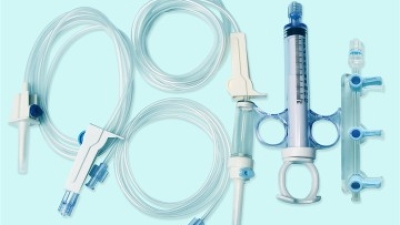
The adoption of medical manifold sets in healthcare settings has emerged as a significant trend aimed at enhancing clinical efficiency. Medical manifold sets serve as vital components in the delivery of medication and contrast agents, particularly in cardiovascular procedures. These devices streamline the infusion process, ensuring that healthcare professionals can deliver treatments swiftly and accurately, thereby improving patient outcomes and reducing the risk of complications.
One prominent example is the Medical Manifold Set, specifically designed for the infusion of medicine or contrast medium. The set, identified by Product No 123003, model MS, is built with advanced specifications that cater to the unique needs of cardiovascular interventions. Its design facilitates seamless connections between multiple infusion lines, reducing the need for numerous individual setups and allowing for more efficient use of time in critical care environments. This increased efficiency not only benefits healthcare providers by optimizing workflow but also enhances the patient experience by minimizing the time spent in procedures.
As the healthcare industry increasingly recognizes the importance of adopting innovative solutions like medical manifold sets, the potential for improved clinical efficiency becomes evident. Industry reports highlight that integrating such devices leads to streamlined operations and better resource management, ultimately paving the way for enhanced patient care in cardiovascular settings and beyond.
FAQS
: Guide wires serve as navigational aids in various surgical interventions, particularly in endovascular surgeries, allowing clinicians to navigate complex anatomical pathways.
Recent studies indicate that guide wire-assisted techniques for accessing vascular systems have a success rate exceeding 90%.
The two most common types are straight guide wires, used primarily in vascular procedures, and coiled guide wires, which are employed in delicate applications like endoscopy or biliary procedures.
By facilitating more precise navigation and reducing the risk of complications, guide wires help minimize procedural times and promote faster patient recovery.
Future trends include the creation of multifunctional guide wires with integrated sensors and real-time imaging capabilities, which aim to improve accuracy and safety in surgical procedures.
The global guide wire market is anticipated to reach $2.24 billion by 2027, growing at a compound annual growth rate (CAGR) of 6.5% from 2020 to 2027.
Advancements in materials science are leading to improved guide wire designs that enhance precision and efficiency, thereby fostering a new era of precision medicine and better patient care.
Coiled guide wires provide greater flexibility for maneuverability in tighter spaces, which reduces the risk of injury to surrounding tissues during delicate procedures.
Studies, including one published in the Journal of Vascular Surgery, have shown that next-generation guide wires can reduce procedural complications by up to 15% in patients undergoing angioplasty.
By providing clinicians with critical feedback and facilitating precise navigation, guide wires help minimize the likelihood of complications during surgeries.
Conclusion
Guide wires have really become a game-changer in today’s surgeries. They’ve come a long way thanks to technological advancements. At first, they were mainly used in traditional surgical techniques, but now, guide wires are essential in minimally invasive procedures too. They offer some pretty big perks, like shorter recovery times and better outcomes for patients. From what we see in clinical data, surgeries that rely on guide wire assistance tend to have pretty high success rates, which just goes to show how important they are in the modern surgical landscape.
In surgery, you'll find different types of guide wires designed for specific tasks—kind of like tools in a toolbox, each built for a purpose. As safety protocols get tighter and technology keeps pushing forward, the future of guide wires looks really promising. Here at Tianck Medical Co., Ltd., we’re dedicated to driving these innovations forward, making sure our products keep pace with what healthcare professionals need, ultimately helping improve patient care around the globe.